१
First — the complete darshan
प्रथम प्रदक्षिणा · संपूर्ण मंदिर दर्शन
The outermost circle. Here you see the whole temple — every shikhar, every pillar, every murti in its place. A first meeting.
Pink sandstone, gold-capped shikhars, forty-lakh litres of the Narmada held in a stone mirror. Nilkanthdham is not a single building — it is a route you walk.
मंदिर दर्शन की विशेषता — पंच परिक्रमा का पथ
The mandir unfolds as a sequence of five concentric pradakshinas, each one a chapter in a long, unhurried darshan: first the whole temple, then one hundred and eight gaumukh showers of Narmada water, then twenty-four avatars of Lord Narayan, then the forty-lakh-litre Nilkanth Sarovar with one hundred and eight saints gathered around it, and finally — at the innermost circle — Shri Nilkanth Varnindra Bhagwan himself.
Inside the shikhars, Shankha-Chakra-Gada-Padma — the Lord's ayudhas — stand in their own vigil. A lotus fountain washes his charan-kamal. In a nearby garbhagriha, Shri Garuda — his vahana — bows in waiting.
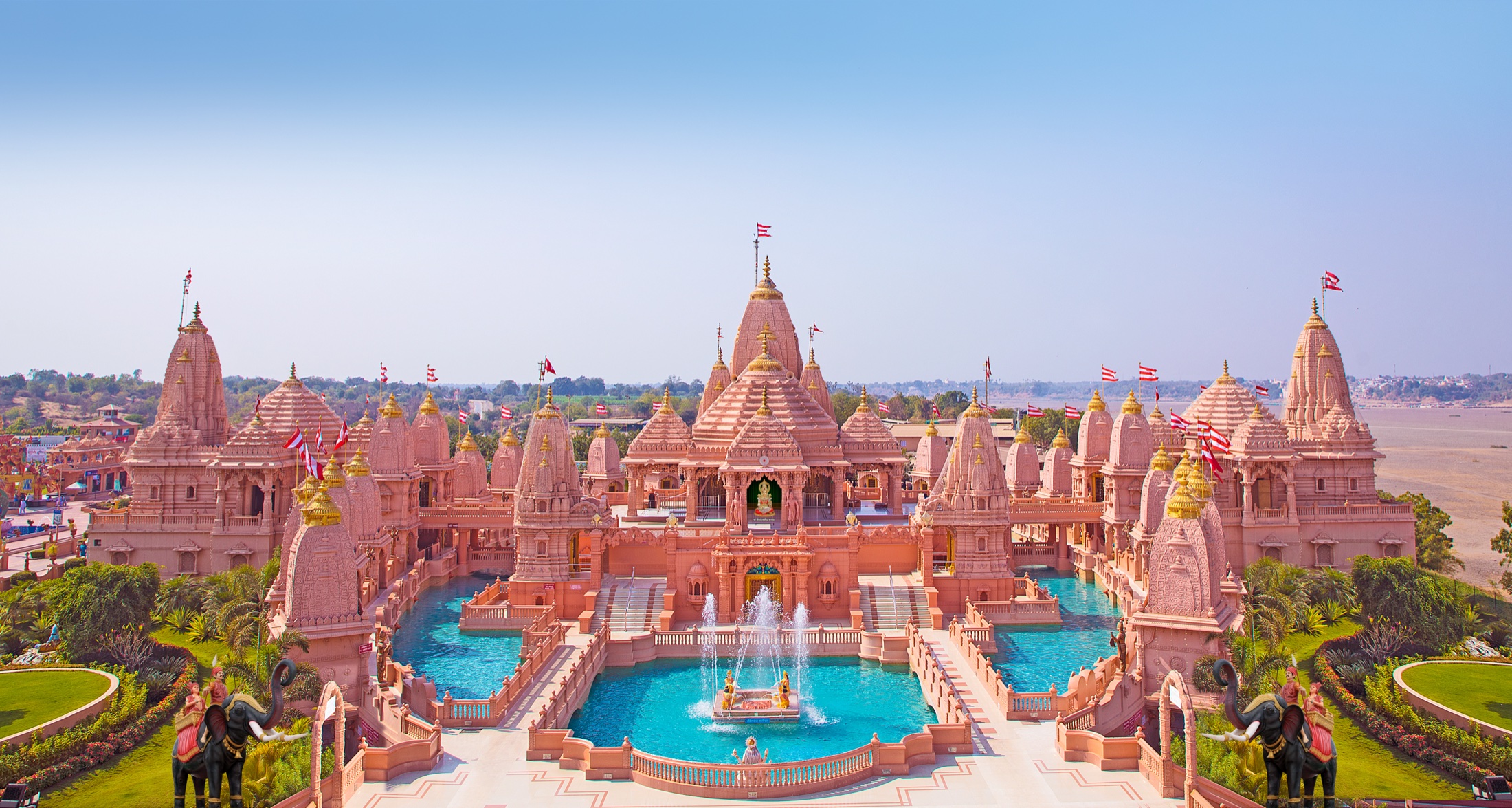
The outermost circle. Here you see the whole temple — every shikhar, every pillar, every murti in its place. A first meeting.
108 sacred gaumukhs pour Narmada's water. Pilgrims bathe here, as the mantra is counted — each drop a name of the Lord.
Twenty-four avatars of Lord Narayan — from Matsya to Kalki. Each a chapter of the Bhagavata.
A forty-lakh-litre mirror of the Narmada holds the sky. Around it, 108 murtis of revered saints and bhaktas — the liberated souls who walked this path.
The final circle, around the garbhagriha itself. Here, at last, stands Shri Nilkanth Varnindra Bhagwan — eternal and watchful.
The Lord's four divine ayudhas — Shankha, Chakra, Gada and Padma — are not merely ornaments; they are symbols of dharma, strength, compassion and divinity.
Their darshan fills a devotee's life with courage, peace, protection and bhakti.
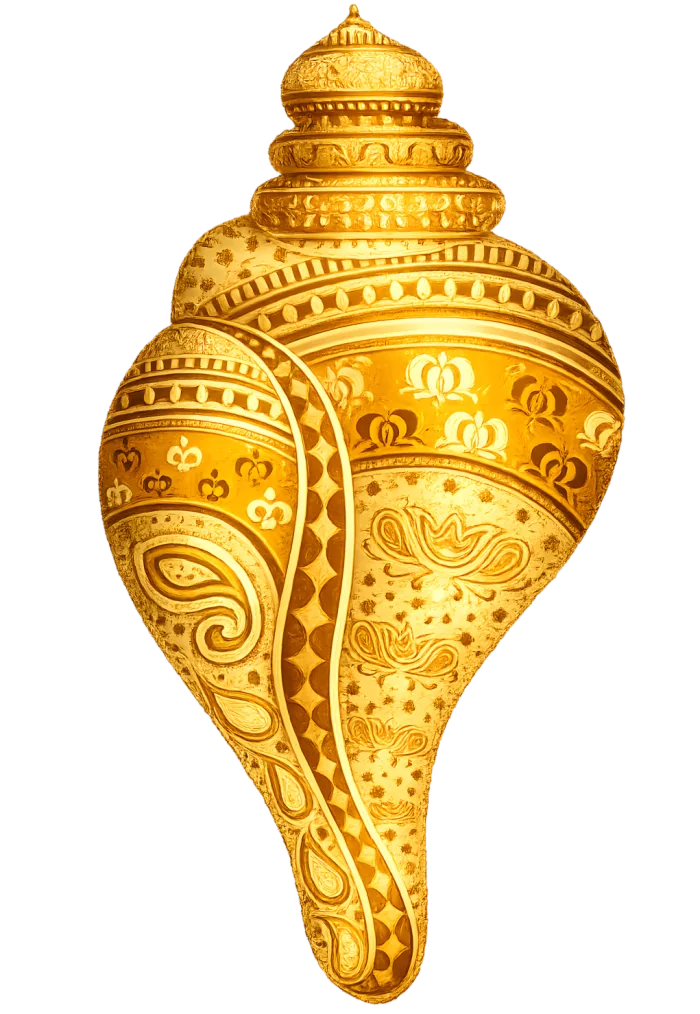
The shankha carries the message of purity and auspiciousness.
Purity · Mangal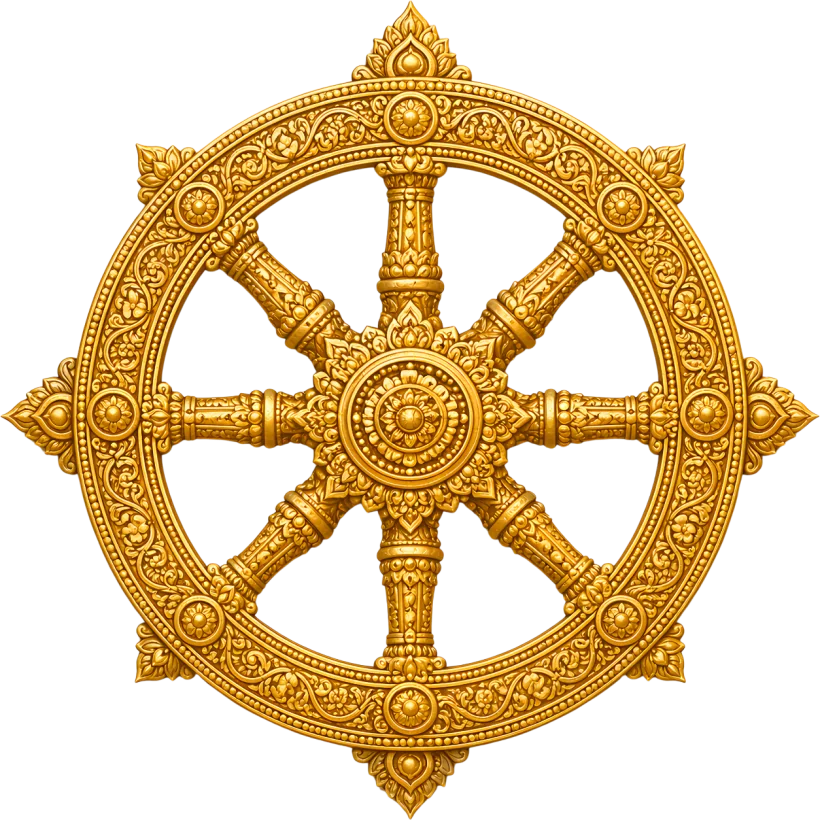
The chakra is the symbol of destroying adharma and protecting dharma.
Dharma · Protection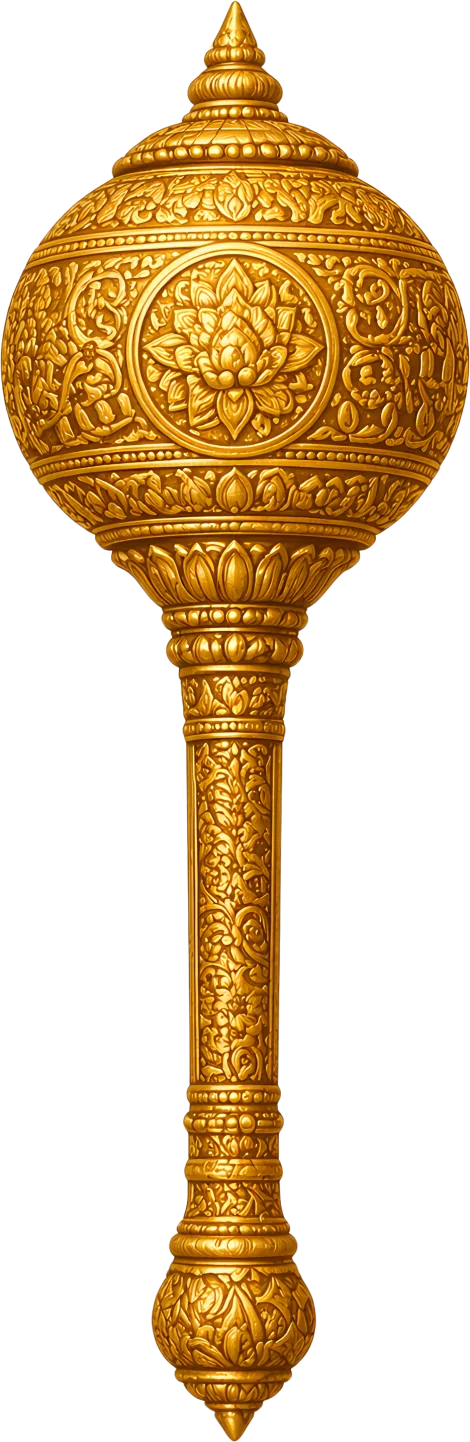
The gada signifies strength and protection.
Strength · Shelter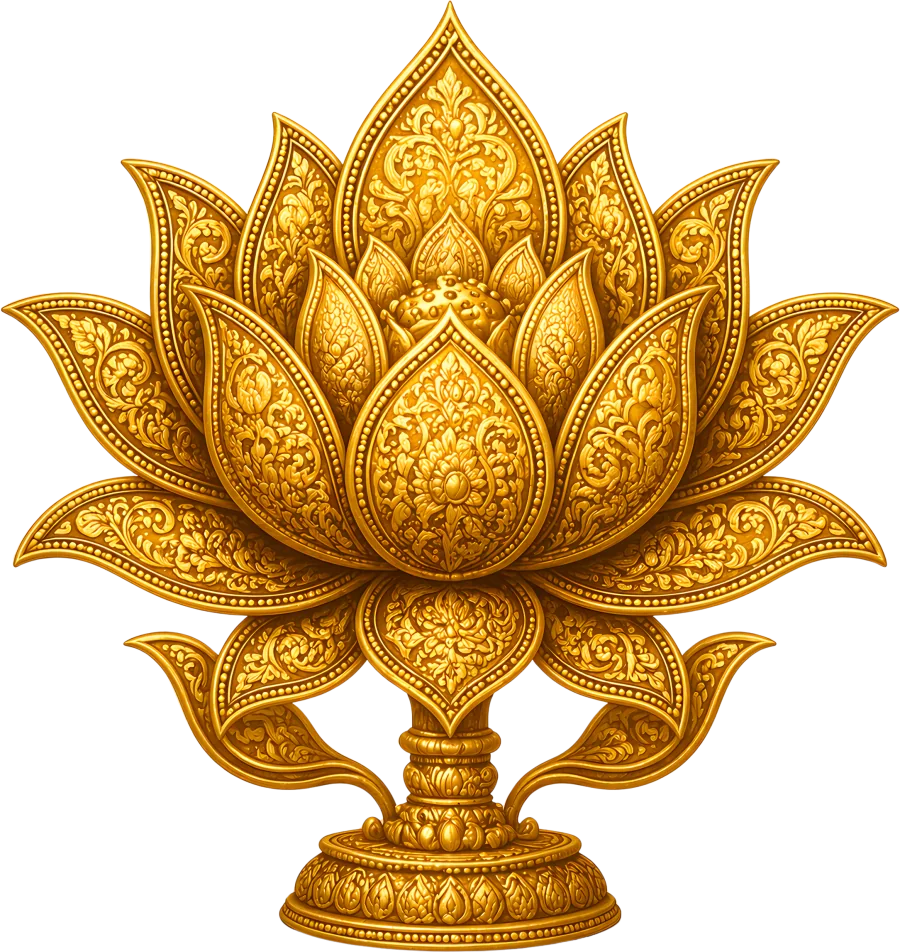
The padma is revered as a symbol of purity, peace and spiritual awakening.
Peace · AwakeningFour mandirs keep a daily rhythm of pujan, homatmak yajna, mantra dhun and scripture recitation.
Pavitra bhudevs perform pujan and homatmak yajna here every morning at 8:30.
Pavitra bhudevs perform pujan and homatmak yajna here every morning at 8:30.
The Swaminarayan mahamantra is chanted here without pause from 8:00 AM to 8:00 PM.
Saints and devotees recite Vedic samhitas and sampradayik granths here.
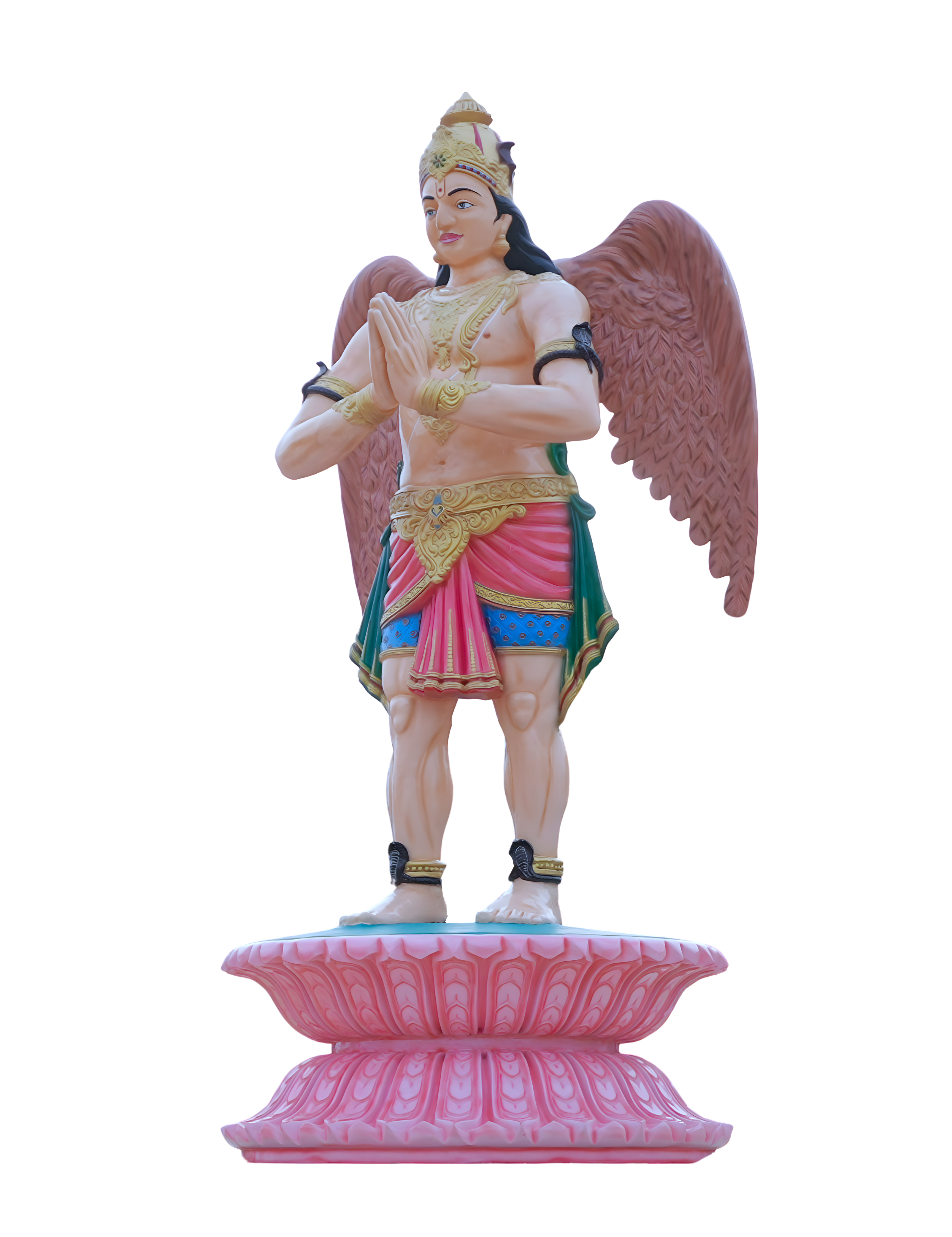
गोपीनाथजी · चरण कमल फुवारा · गरुड दर्शन
Shri Gopinathji Maharaj — Radha, Krishna, Gopinath — stand in their own garbhagriha. A lotus fountain bathes Bhagwan's charan-kamal. And in an ashtadal padma, Shri Garuda — his vahana — keeps silent watch over the sarovar.
Ramanujacharya · Vallabhacharya · Adi Shankaracharya · Ramanand Swami
The acharya of Vishishtadvaita Vedanta, whose compassion made bhakti simple and accessible.
The acharya of Shuddhadvaita and Pushtimarg, remembered for prema-bhakti and divine seva.
The jagadguru who renewed Sanatan Dharma through Advaita Vedanta, vairagya and self-knowledge.
The founder of Uddhav Sampraday and guru of Bhagwan Swaminarayan, revered for sadachar and Vaishnav dharma.