From the pre-dawn abhishekam to the evening sandhya aarti, Bhagwan Nilkanth is received as a royal guest — bathed, fed, adorned, honoured — every single day, without exception.

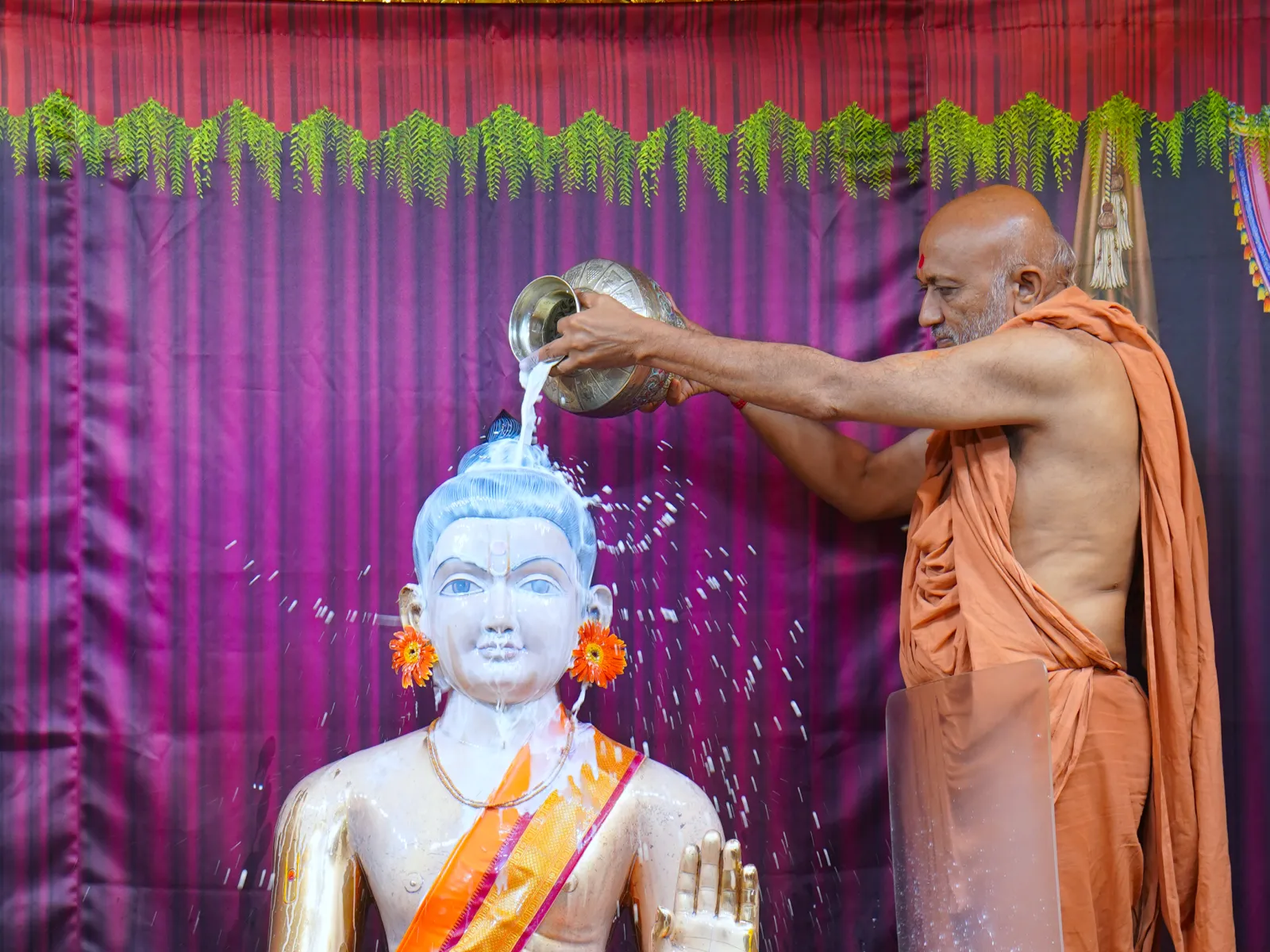
Each morning, before the first light, Shri Nilkanth Varnindra Bhagwan is bathed in Narmada water, pancha-amrit and the chanting of Rudrabhishek mantras — a consecration that has happened, unbroken, since the pratishtha.
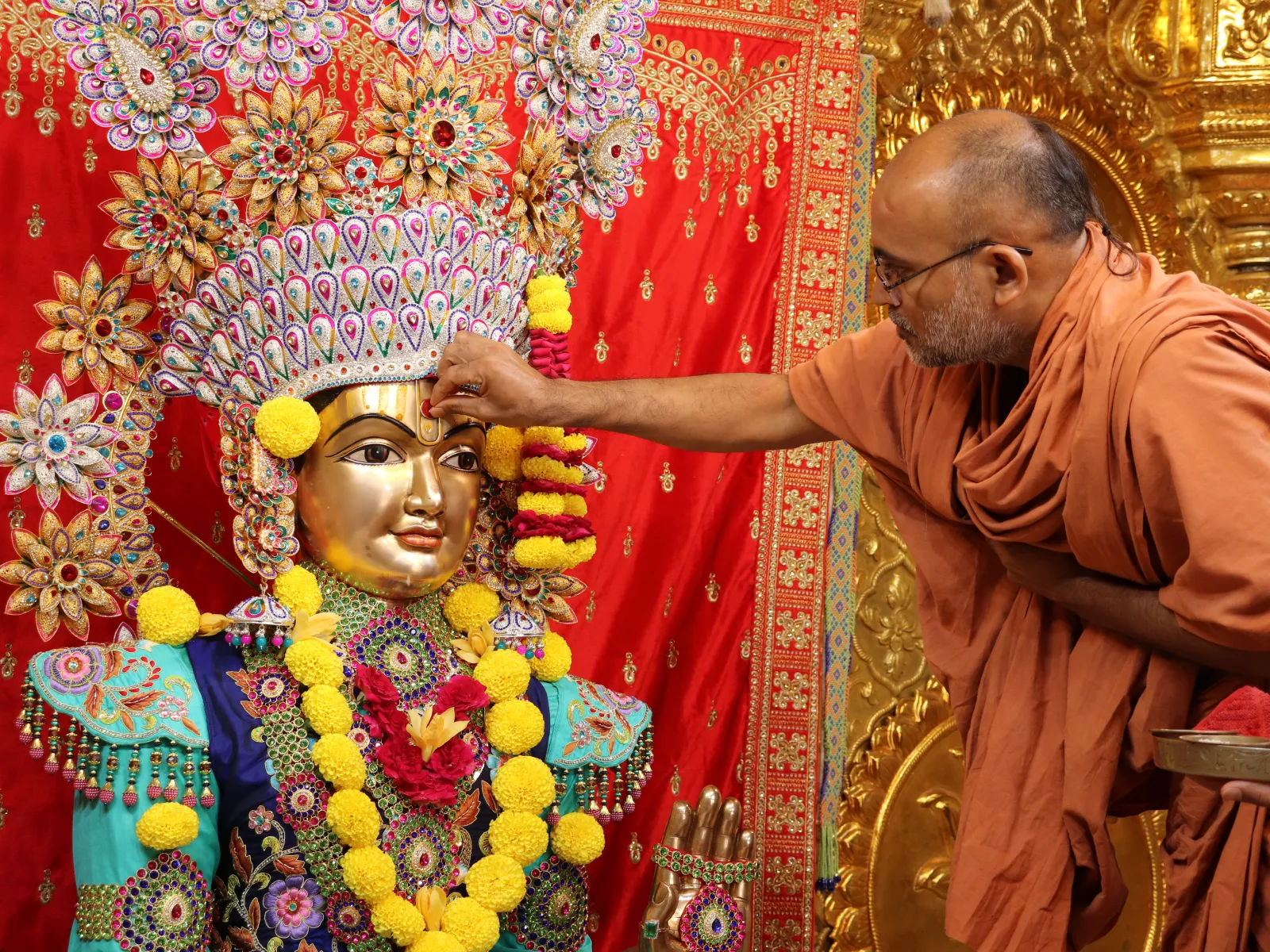
The priests enter the garbhagriha before sunrise. The murti is undressed, bathed in pure water drawn from the Narmada the night before, then anointed with panchamrit — milk, curd, honey, ghee and sugar. Rudrabhishek mantras accompany each stream. Afterwards Bhagwan is dried, dressed in fresh vastra, adorned with malas and singhar, and shringar darshan opens.
Devotees may offer an Abhishek Labh — to have their name taken during the sankalpa, with a small portion of the panchamrit returned as prasad.
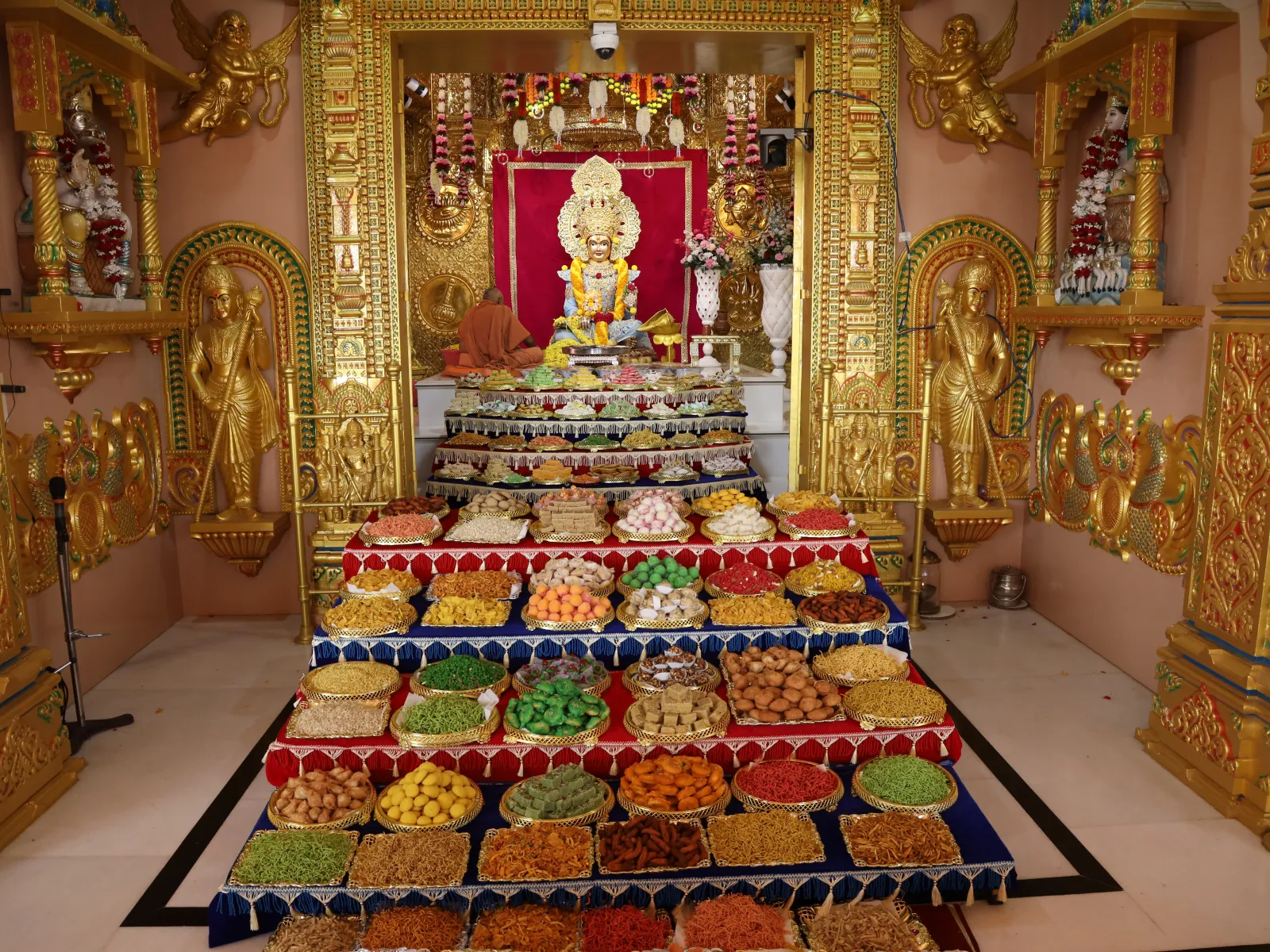
The noon thal — offered to Bhagwan on silver platters heaped with seasonal rasoi — is the house's most abundant offering. On festival days it becomes a chhappan bhog: fifty-six varieties arrayed before the Lord.
Rice, rotlis, shak, dal, farsan, mithai, phal, dry-fruits, sweetened milk, chaunsath pakvaans — every mould and ghee is hand-poured by the rasoi seva team. After the thal is offered, the garbhagriha doors close for bhog darshan — Bhagwan's private meal. When they re-open, the prasad is distributed to every pilgrim present.

Rajopchar — 'royal upchar' — is the sixteen-fold worship in which Bhagwan is treated as an honored monarch: bathed, robed, throned, anointed, fed and seen. The sixteen upchars begin with avahana (invocation) and arghyam (offering of water) and end with aarti and pushpanjali. Each is accompanied by a specific Vedic mantra.
A sankalp lets a devotee have their name taken for the poojan — often offered for the peace of departed parents, the success of a family member, or the founding of a new home.

At dusk the mandir lights come up, conches sound, and the aarti thali moves in slow circles before the murti to the old Gujarati refrain — Jai Sadguru Swami.
Sandhya aarti is the most attended ritual of the day. Thousands of pilgrims pack the sabhamandap, candles are lit across the sarovar, and the entire perimeter of the mandir glows with diyas. The aarti lasts eighteen minutes and closes with the 'Pavitra aarti' shloka.